A proper pair of weightlifting shoes is the single best upgrade most lifters can make. The raised, solid heel lets you sit into a deeper, more upright squat, and the non-compressible sole means every bit of your drive goes into the bar instead of a squashy midsole. Below are the pairs we rate, who each one suits, and what to look for — whether you want a do-everything competition shoe or a first pair on a budget.
For what it’s worth: I competed for Great Britain and held a British record, and I have trained in most of what follows. This is what I would actually put a lifter in, not a list assembled off spec sheets.
In a hurry? The Adidas Adipower Weightlifting 3 is our pick for most lifters, the Nike Romaleos 4 is the most stable heavy-squat platform, and the Adidas Powerlift 5 is the best buy on a budget.
What to look for
- Heel height. Usually 15–22 mm. A higher heel (20–22 mm) suits taller lifters, long femurs or tight ankles; a lower one (~15 mm) feels more natural and versatile.
- A solid heel. Moulded TPU or wood that doesn’t compress — never foam.
- A locked-in midfoot. One or two straps over the laces so your foot doesn’t slide when you catch a heavy clean.
We go deeper on heel height and fit in our Adidas weightlifting shoes guide.
The best weightlifting shoes
Adidas Adipower Weightlifting 3 — best overall
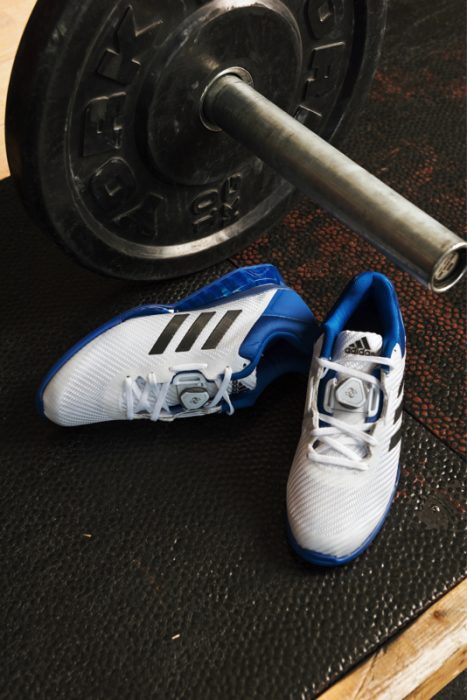
A tall 22 mm TPU heel, a wide midfoot strap over laces, and a sole that simply does not budge under a maximal clean or jerk. It’s the do-everything Olympic lifting shoe, it lasts for years, and it’s what we’d put most lifters in without a second thought.
I wore Adidas Adipowers back in the day, and the current Adipower Weightlifting 3 is the direct descendant — same tall, planted heel, and what I'd lift in now.
Check price on AmazonNike Romaleos 4 — most stable platform
A 20 mm heel, twin midfoot straps and a wide, rigid outsole give the Romaleos the most planted, locked-down feel of any shoe here — superb under heavy squats and jerks. The one catch: they run a little narrow, so if you have wide feet, look at the TYR below instead.
Check the Nike Romaleos 4 on Amazon
Reebok Legacy Lifter III — best tall heel
Another 22 mm platform, stable and planted, built to last. A great shout if you want a high heel and a dedicated lifting shoe that’ll take years of abuse.
The current Legacy Lifter — a stable, high-heeled platform that stays planted under a heavy jerk. Our pick if you want a dedicated lifting shoe that will last years.
Check price on AmazonRead our full Reebok Legacy Lifter review.
TYR L-1 Lifter — best for wide feet
A 21 mm heel, dual straps and a genuinely wide, anatomical toe box. If the Adipower or Romaleos have ever felt like they’re pinching, this is the pick — roomy up front without giving up the solid heel.
Check the TYR L-1 Lifter on Amazon
Adidas Powerlift 5 — best budget
Adidas’s entry-level lifter and a genuinely good shoe for the money. A lower ~15 mm heel and a more flexible sole make it a friendly first pair, or a solid choice if you also do general strength work. Two caveats: the toebox is narrow and it runs short, so order at least half a size up.
Adidas's entry-level lifter — a lower heel, a more flexible sole and a friendly price. A genuinely good budget shoe; just order at least half a size up.
Check price on AmazonHeel heights at a glance
| Shoe | Heel height | Best for |
|---|---|---|
| Adidas Adipower Weightlifting 3 | 22 mm | Most lifters / all-round |
| Reebok Legacy Lifter III | 22 mm | A tall, planted heel |
| TYR L-1 Lifter | 21 mm | Wide feet |
| Nike Romaleos 4 | 20 mm | Maximum stability |
| Adidas Powerlift 5 | ~15 mm | Budget / beginners |
What about squats specifically?
This is the question we get most, and the answer depends on how you squat. A raised heel lets you keep a more upright torso and sit deeper, which is exactly what you want for high-bar and Olympic squats, and it is a genuine help if you have long femurs or stiff ankles. If that is you, the Adipower 3 or Romaleos 4 will change how your squat feels immediately.
Low-bar powerlifting squatters are a different case. That style already sits more forward-leaning, so a big heel is less useful and some lifters prefer something flatter. The Powerlift 5 and its lower heel is the sensible middle ground if you squat both ways.
Weightlifting shoes vs powerlifting shoes
They are not the same thing, and buying the wrong one is a common and expensive mistake.
- Weightlifting shoes have a raised, solid heel, typically 15 to 22 mm. They are built for the snatch, the clean and jerk, and deep front and high-bar back squats.
- Powerlifting is more mixed. Many lifters squat in a low-heeled or flat shoe and deadlift in something flat and thin, because a raised heel lengthens the distance the bar has to travel off the floor.
The short version: do not deadlift in a 22 mm heel. If you compete in powerlifting you will probably end up owning two pairs, and that is normal.
Can you just lift in running shoes?
You can, and you should stop. A running shoe is engineered to compress and return energy, which is the exact opposite of what you want under a barbell. Every bit of drive you put into the floor gets absorbed by foam instead of moving the bar, and the soft midsole lets your ankle roll under load.
Maximum-cushion shoes such as Hokas are the worst offenders. The tall, soft stack that makes them pleasant for a long run makes them genuinely unstable in a heavy squat or a jerk. If you are not ready to buy lifting shoes yet, flat and hard beats cushioned: Converse, Vans or plain barefoot-style trainers are all better than anything built for running.
Sizing and fit
Lifting shoes should feel snug. You want your foot locked in place, not room to slide about when you catch a clean. A few specifics worth knowing before you order:
- The Powerlift 5 runs short. Order at least half a size up.
- The Romaleos 4 run narrow. If your feet are wide, they will pinch.
- The TYR L-1 has the roomiest toe box here, which is why it is our wide-feet pick.
- Most of these are unisex sizing, so check the conversion rather than assuming your usual number.
If you can try a pair on at a competition or a club, do. Half the battle is width, and width is the thing spec sheets never tell you.
Which should you buy?
For most lifters, get the Adipower 3 and be done with it. Want the most planted platform and have narrow-ish feet? The Nike Romaleos 4. Wide feet? The TYR L-1. After a tall heel? The Reebok Legacy Lifter III. On a budget or just starting out? The Powerlift 5. Any of them will make you wonder how you ever lifted in trainers.
New to the lifts? Start with our technique guides and the how to learn the snatch walkthrough — and see the straps, sleeves and shoes we actually train in on our recommended gear page.
As an Amazon Associate, Lifting Times earns from qualifying purchases. Some gear links are affiliate links, at no extra cost to you. Learn more.