Search for the best weightlifting belt and almost everything you find is a powerlifting belt. That is not pedantry: the two sports ask different things of a belt, and a stiff 13mm slab built for a squat single is the wrong tool for catching a snatch in the bottom position.
Here is how to pick one for Olympic lifting, what the rules actually allow, and the belts worth looking at in the UK.
What a belt actually does
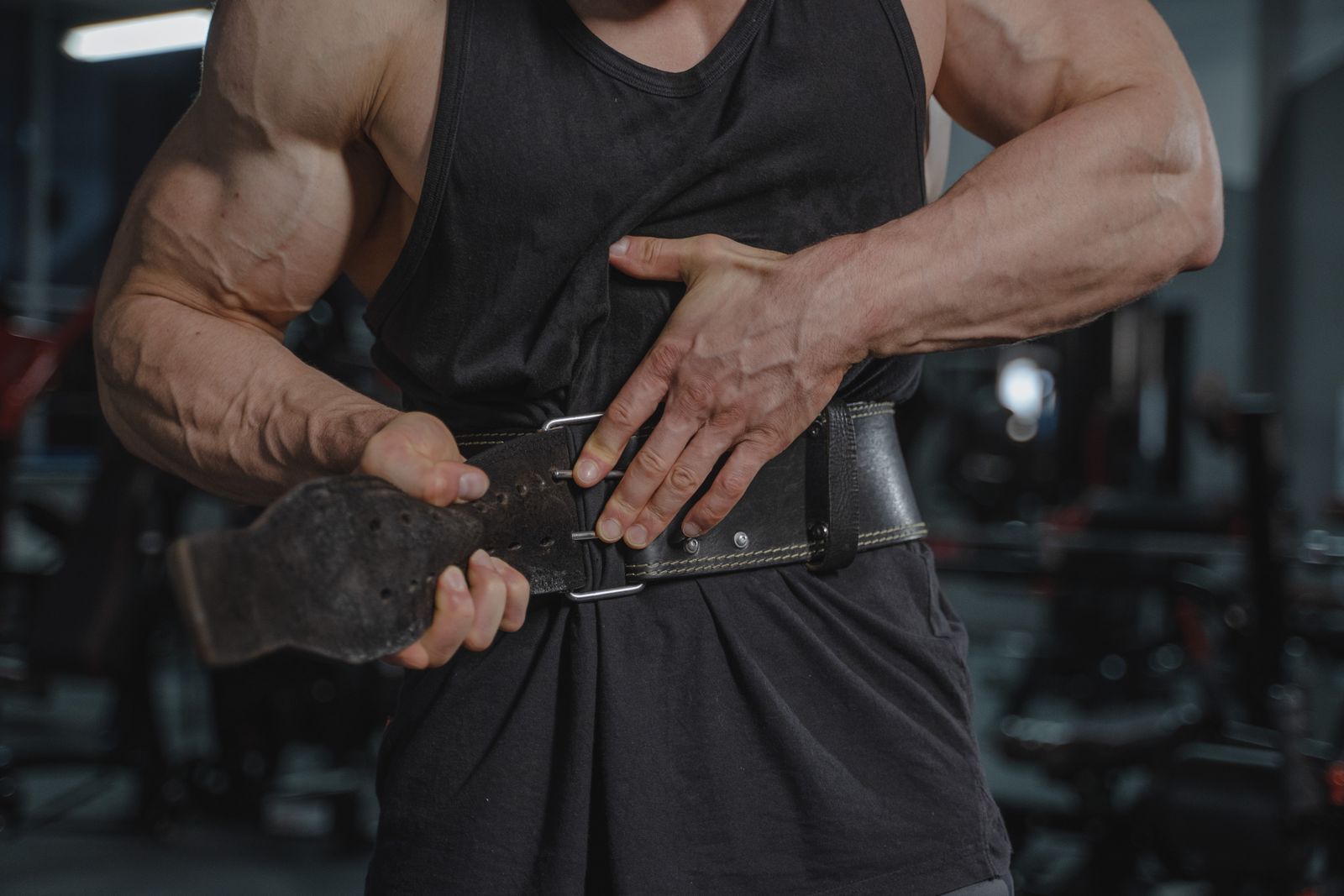
A belt is not back support in the way people assume. It gives your abdominal wall something to press against, so you can build and hold intra-abdominal pressure. That braced trunk is what stops your torso collapsing forward under a heavy clean or out of the hole in a squat.
Two things follow. You have to know how to brace for a belt to do anything useful, and a belt worn loose does close to nothing. It should be snug enough that you have to push out against it, not so tight you cannot take a breath before the lift.
Weightlifting belts and powerlifting belts are not the same thing
This is the bit the generic buyer’s guides skip, and it is the whole decision.
A powerlifting belt is built to be as stiff as the rules allow. Uniform width all the way round, thick leather, and a lever or single prong. Under IPF rules it can be up to 10cm wide and 13mm thick. That stiffness is exactly what you want braced against a maximal squat or deadlift, where your torso angle barely changes.
Olympic lifting is a different problem. You receive the bar in a deep squat with the torso upright, you move through positions quickly, and you often want to loosen the belt between attempts. A 13mm powerlifting belt digs into the ribs and hips at the bottom of a snatch and fights you on the turnover.
Counterintuitively, the IWF is the more permissive of the two on width: its technical rules cap a belt at 12cm, wider than the IPF’s 10cm. In practice almost nobody lifts in a 12cm belt. Most weightlifters end up in something thinner and more forgiving, roughly the 6.5mm to 10mm range, precisely because the sport rewards mobility over maximum stiffness.
Do you actually need one?
Honestly, maybe not. I lifted for years and barely touched a belt. My back was never the thing that complained, my knees were, and no belt was going to help with that. That is not advice either way, just a reminder that a belt solves one specific problem. If you do not have that problem, it is not doing much for you.
If you are still learning the lifts, a belt also hides the bracing you should be building, and you will be well under the loads where it makes a difference. Get comfortable bracing unbelted, then add one for your heavier work as the numbers climb. When you do, keep it for the sets that need it. A belt on every warm-up is a belt doing your bracing for you.
And if it is your knees rather than your back, you want a decent pair of sleeves instead.
What to look for
- Thickness. Somewhere around 7mm to 10mm is the sensible range for weightlifting. 13mm is powerlifting territory and most lifters find it restrictive in the catch.
- Closure. A lever is fastest and repeatable, but it is set to one size and needs a screwdriver to change. A prong is slower but adjusts freely, which matters if your waist changes through a session. Quick-lock nylon is the fastest of all to loosen between attempts, which is why you see so much of it in weightlifting halls, at the cost of some rigidity.
- Shape. Uniform width is standard and legal in both sports. A belt that tapers at the front is more forgiving when the torso folds in the bottom of a catch.
- Material. Full-grain leather lasts decades and stiffens with use. Suede lining grips better and is kinder to skin. Nylon is lighter, more forgiving and dries out faster if you sweat heavily.
- Sizing. Belt sizes are not trouser sizes. Measure around your navel, over whatever you actually lift in, and buy to that measurement. Most returns happen because someone ordered their jeans size.
The belts worth looking at
Gymreapers 7mm leather, best all-round for the classic lifts
A 4 inch tapered leather belt at 7mm, suede lined, with a dual prong buckle. That combination is close to ideal for weightlifting: thin enough that it does not jam into your ribs in the bottom of a catch, tapered so it sits out of the way at the front, and a prong so you can drop it a notch between attempts. Their own sizing note tells you to measure around the navel rather than the waist, which is the right instruction and one plenty of brands get wrong.
A 7mm tapered leather belt with a dual prong. Thin enough that it does not fight you in the bottom of a catch, and the prong means you can loosen it a notch between attempts.
Check price on AmazonGymreapers quick-locking nylon, best for fast adjustment
Nylon, 4 inch, with a quick-lock metal buckle that comes off and back on in about a second. If you train in a session format where you are belting up and down constantly, or you just dislike the faff of a prong between sets, this is the one. You give up some rigidity against leather, which is the trade being made.
Nylon with a quick-lock buckle, so it comes off and back on in a second between lifts. Less rigid than leather, which is the trade you make for that speed.
Check price on AmazonAQF 10mm lever, if you squat and pull heavy too
A 10mm leather lever belt for anyone whose programme includes serious squatting and deadlifting alongside the classic lifts. Stiffer than you want for snatches, which is exactly the point under a max squat. The lever locks to one setting, so size it carefully before you commit.
A 10mm leather lever belt for anyone whose training also includes heavy squats and pulls. Stiffer than you want for the classic lifts, which is exactly the point under a max squat.
Check price on AmazonBuying in the UK
Beyond Amazon, Strength Shop and Pullum Sports both stock a proper range and ship domestically, which saves the customs surprise that comes with ordering leather from the US. Eleiko and Adidas both make weightlifting-specific belts if you want something from a brand that builds for the sport rather than for general strength training.
Whatever you buy, buy it somewhere you can return it easily. Sizing is the single most common reason a belt goes back.
The short version
- One belt for Olympic lifting: 7mm to 10mm leather, tapered, prong, sized to your navel measurement.
- Belting up and down constantly: quick-lock nylon.
- Heavy squats and pulls in the mix as well: 10mm lever.
- Still learning the lifts: no belt yet. Learn to brace first.
Once your pulls outgrow your grip, straps are the other thing worth owning. We covered those in the best lifting straps, and if you are still deciding on footwear, the best weightlifting shoes covers the other end of your setup.
As an Amazon Associate, Lifting Times earns from qualifying purchases. Some gear links are affiliate links, at no extra cost to you. Learn more.